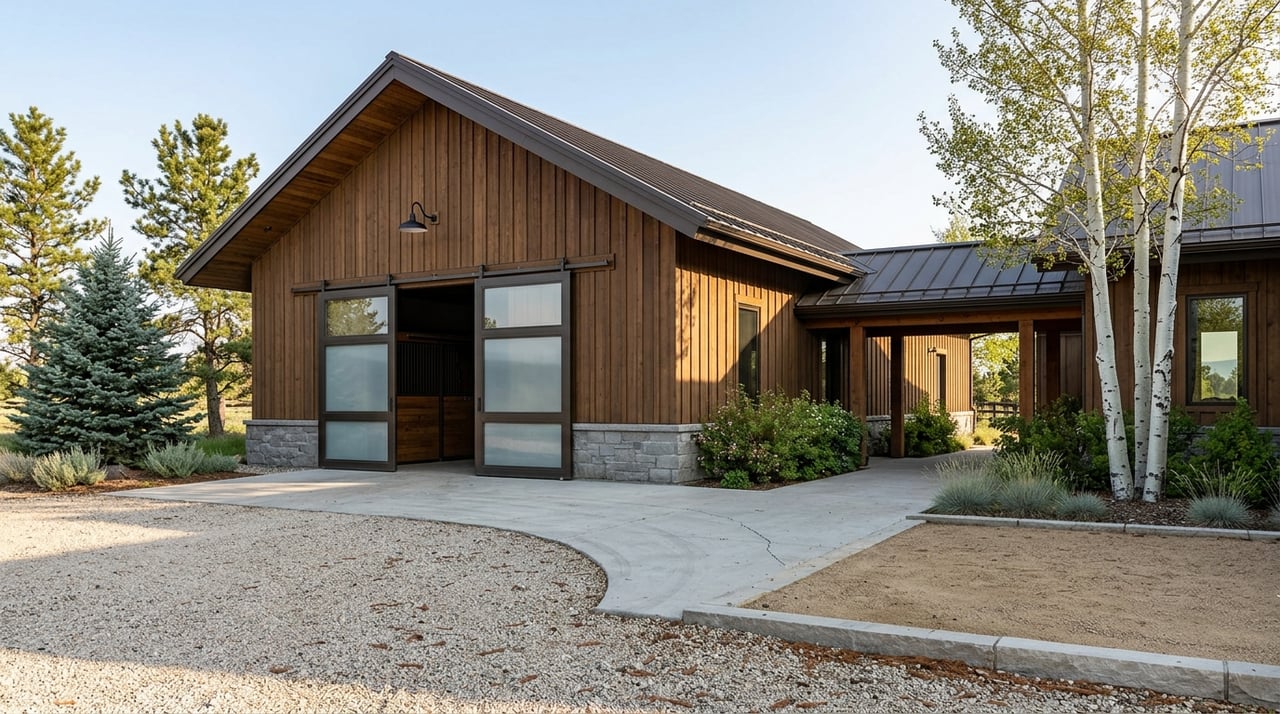
If you are thinking about creating an equestrian property in Silver Creek Estates, the biggest mistake is assuming every lot works the same way. This neighborhood offers real flexibility for horse owners, but the details can vary from parcel to parcel. If you want to plan wisely, you need to understand lot size, water, zoning, recorded plat notes, and how Summit County reviews barns, arenas, and guest quarters. Let’s dive in.
Silver Creek Estates planning basics
Silver Creek Estates is in Summit County’s Snyderville Basin planning district, in the unincorporated area around Park City Municipal. That means planning and development are governed by the Snyderville Basin Development Code, not a city code.
It is also important to understand that Silver Creek Estates is served by Summit County Service Area #3. According to the county, that service area provides water, roads, trails, drainage, and park services, and it is not an HOA.
That no-HOA detail matters, but it does not mean there are no restrictions. County records show that Silver Creek Estates plats have historically included recorded declarations and plat notes covering things like allowed uses, setbacks, and height limits. In practical terms, you should verify the exact rules tied to the specific lot you are considering.
Lot size shapes your options
One of the defining features of Silver Creek Estates is that it is not a one-size-fits-all neighborhood. County records show a wide range of lot sizes, including a 0.94-acre Unit I lot, Unit F lots at 1.39, 1.47, 2.30, and 2.90 acres, and a 16.89-acre Unit C parcel.
That range matters when you start planning horse facilities. A smaller parcel may support a very different setup than a larger tract, especially if you are considering multiple stalls, turnout space, hay storage, or an arena.
Current listings reflect that same variety in the market. Local examples have included a 2.66-acre horse property with a heated 4-stall barn, tack room, hay storage, and 2-bedroom caretaker’s quarters, as well as a 7.64-acre estate with fenced pastures, an outdoor riding arena, and a barn with tack room.
What equestrian features buyers often want
If you are comparing properties or planning improvements, it helps to know what horse-ready features show up in the local market. In Silver Creek Estates, recent listings point to a practical checklist of improvements buyers tend to notice.
Common horse-property improvements
- Barns
- Tack rooms
- Hay storage
- Fenced pastures
- Outdoor riding arenas
- Caretaker or guest-style quarters where allowed
These features are not guaranteed on every parcel, and they are not automatically permitted just because other nearby properties have them. Still, they offer a helpful picture of what an equestrian setup can look like in this area.
Zoning and use are not the same thing
Silver Creek Estates A, B-G, and I are listed by Summit County under the RR/HS classification. That places the neighborhood within the basin’s rural-lot zoning framework.
Summit County staff reports also state that agriculture is an allowed use in all Snyderville Basin zoning districts. For horse owners, that is encouraging, but there is an important distinction between keeping horses on a private residential property and running a commercial horse boarding operation.
Private and commercial horse boarding may require CUP, LIP, or TUP review depending on the zone. So if your vision includes anything beyond personal use, you will want to confirm what level of county review may apply before you move forward.
Planning a barn or large outbuilding
For many equestrian buyers, the barn is the centerpiece of the property. In Silver Creek Estates, larger barns and accessory structures can be possible, but they may trigger formal county review.
County materials describe accessory buildings over 2,000 square feet as major accessory buildings. Larger structures require more review than a small utility building, which is why design, scale, placement, and approvals should be part of your planning from the start.
A county hearing for the 16.89-acre Unit C parcel involved a Major Accessory Building application. While that does not guarantee the same outcome for every lot, it does show that substantial outbuildings can be part of the process when county review is satisfied.
Guest quarters and caretaker space
Some buyers want room for a caretaker, guests, or extended stays tied to the equestrian lifestyle. Summit County’s general regulations allow an accessory dwelling unit within or attached to an accessory structure such as a barn or garage, but there are limits.
The accessory dwelling unit is limited to 1,000 square feet and requires site-plan and floor-plan review. That means guest or caretaker quarters may be possible on some properties, but they are never automatic.
If a property already has this type of space, you should confirm whether it was properly permitted or legally grandfathered. That step can save you time, cost, and uncertainty later.
Water matters more than many buyers expect
Water is one of the most important parts of planning an equestrian property in Silver Creek Estates. According to the Service Area #3 guide, some properties are on private wells while others are connected to the service-area system.
The same county guide also notes that water is limited in the service area and in Snyderville Basin. For horse properties, that makes water entitlement a key part of due diligence.
You will want to understand not just whether water is available, but also how the parcel is served and what that means for your intended use. A beautiful lot with limited water flexibility may not support the same equestrian vision as a similarly sized parcel with a different water situation.
Why no HOA does not mean no rules
A lot of buyers are drawn to Silver Creek Estates because it does not operate under a private HOA in the usual sense. That can offer a different ownership experience, but it should not be confused with unrestricted use.
Summit County explains that HOAs are private organizations with their own CC&Rs that apply only within HOA boundaries. In Silver Creek Estates, the governing framework is different, yet recorded declarations, plat notes, zoning rules, and county permitting still matter.
That is why parcel-level verification is so important here. Two properties in the same neighborhood may offer very different planning options depending on the plat unit, existing improvements, and recorded conditions.
Trail access is a meaningful plus
One appealing feature for equestrian-minded buyers is the local trail context. Service Area #3 says its trails are used by walkers, joggers, bikes, and horses, and that motorized vehicles are not allowed.
That does not replace the need to verify your specific riding plans or access points, but it does add to the lifestyle appeal of the area. For many buyers, the ability to live in a horse-oriented setting with established trail use is part of what makes Silver Creek Estates stand out.
A smart pre-offer checklist
Before you make an offer on a Silver Creek Estates equestrian property, it helps to slow down and verify the details that will shape your long-term use. This is where good guidance can protect both your lifestyle goals and your investment.
What to confirm before you buy
- Verify the exact parcel on Summit County GIS
- Confirm the current zoning designation
- Review recorded plat notes and declarations
- Ask whether the barn, arena, or guest quarters were permitted or grandfathered
- Confirm water entitlement and whether the property uses a private well or service-area water
- Ask about road maintenance, snow removal, drainage, and access
- Confirm whether your intended use is private horse keeping or something that could trigger additional review
The county building department also states that a building permit is required for construction, enlargement, alteration, repair, movement, improvement, removal, conversion, or demolition of a building or structure. In other words, you should assume barns, arenas, and guest quarters are permit-sensitive improvements.
The real takeaway for buyers
Silver Creek Estates can be an excellent place to plan an equestrian property, but success depends on matching your vision to the right parcel. The neighborhood offers flexibility, trail access, and a range of lot sizes, yet the exact opportunity depends on the specific plat unit, water status, existing improvements, and whether the property is meant for private horse use or a more commercial equestrian operation.
If you are looking at horse property in the 84098 area, a careful, parcel-by-parcel approach is the best way to move with confidence. In a market where discretion, land quality, and use potential all matter, informed planning is part of protecting the value of your purchase.
When you want experienced, locally grounded guidance on Silver Creek Estates and other lifestyle-driven properties in Park City and the Wasatch Back, connect with Paula Higman for a private consultation.
FAQs
What governs equestrian property planning in Silver Creek Estates?
- Silver Creek Estates is in Summit County’s Snyderville Basin planning district, so development is governed by the Snyderville Basin Development Code, along with any lot-specific plat notes, declarations, and county permitting requirements.
Does Silver Creek Estates have an HOA for horse-property rules?
- Summit County Service Area #3 serves the neighborhood and provides services like water, roads, trails, drainage, and parks, but it is not an HOA. You still need to review recorded parcel restrictions and county rules.
Can you build a barn on a Silver Creek Estates lot?
- A barn may be possible, but the answer depends on the specific parcel, zoning, plat restrictions, and county review. Larger accessory buildings over 2,000 square feet can trigger more formal review.
Can a Silver Creek Estates barn include guest or caretaker quarters?
- Summit County allows an accessory dwelling unit within or attached to an accessory structure like a barn or garage, but it is limited to 1,000 square feet and requires site-plan and floor-plan review.
Is every Silver Creek Estates property suitable for horses?
- Not necessarily. Lot sizes vary widely, water service differs by parcel, and existing restrictions or approvals can affect what is practical for horse use.
What should buyers verify before purchasing a horse property in Silver Creek Estates?
- Buyers should verify the parcel, zoning, plat notes, declarations, permitting status of existing improvements, water entitlement, access, drainage, road maintenance, and whether the planned use is private or could require additional county review.
About Paula Higman
Paula Higman is a REALTOR® with Coldwell Banker Global Luxury and founder of Higman Private Collection, specializing in luxury homes, ranches, recreational properties, development land, and discreet off-market opportunities throughout Park City, Deer Valley, Midway, Heber Valley, Oakley, Kamas, and the surrounding Wasatch Back.
Having called Park City home for more than 34 years, Paula combines deep local knowledge with strategic negotiation, business expertise, and a relationship-driven approach to help buyers and sellers make confident real estate decisions.