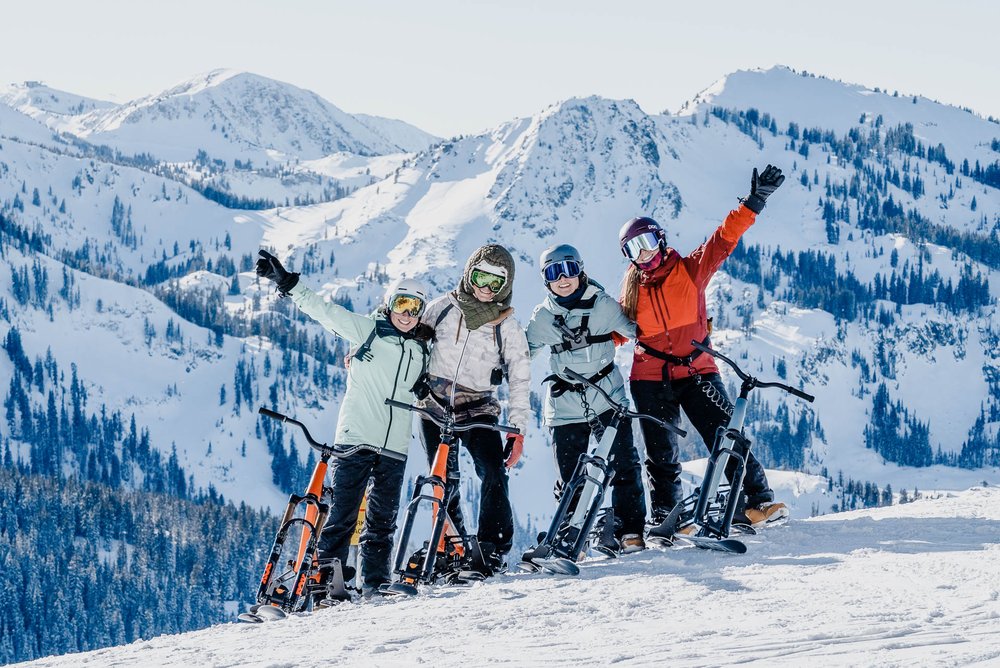
WELOME TO SUN PEAK in Park City, UT
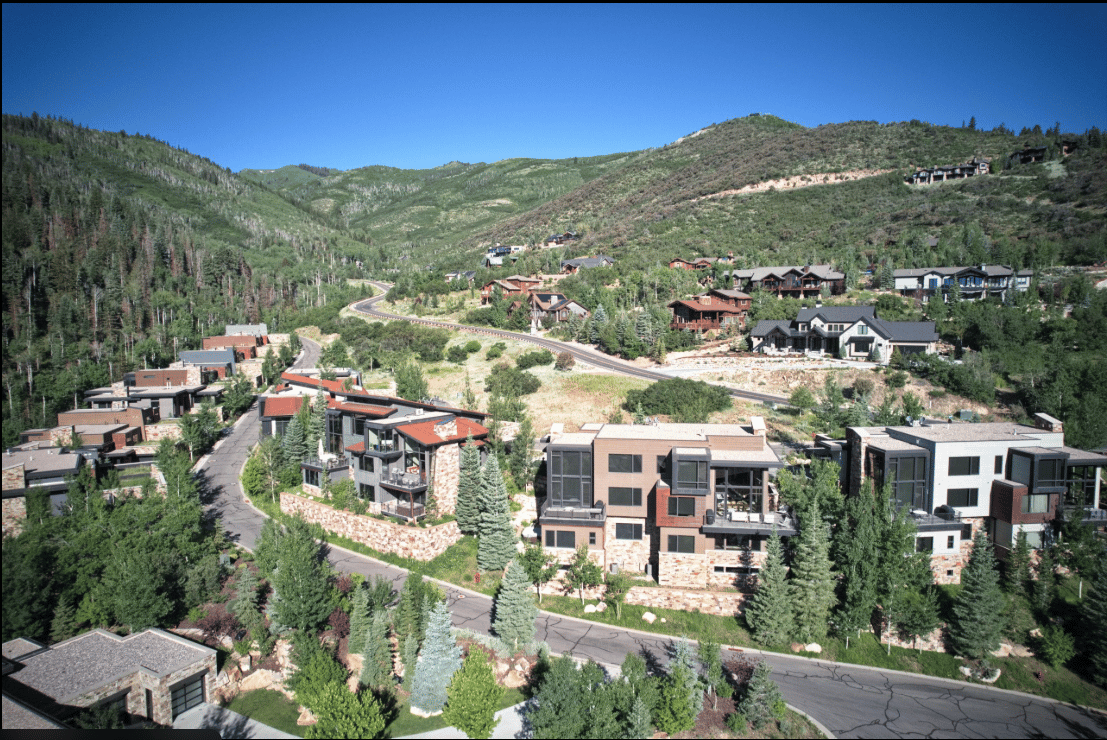
Rising into the wooded hillsides above the Snyderville Basin, Sun Peak occupies one of the most strategically compelling mountain settings in Park City. Positioned between Canyons Village at Park City Mountain and Utah Olympic Park, Sun Peak combines elevated mountain living, extensive protected open space, private neighborhood amenities, interconnected trails and panoramic views with remarkably convenient access to skiing, shopping, dining, schools and Park City's larger recreational network.
Calling Sun Peak merely “close to Utah Olympic Park” does not adequately describe the geography. The Sun Peak Master HOA's own wildfire planning identifies Utah Olympic Park as the community's northern boundary, placing the neighborhood directly against the nearly 400-acre Olympic venue and its mountain terrain. To the south and west lie additional mountain lands and Canyons-area terrain, while Highway 224 and the Snyderville Basin stretch below to the east.
That position gives Sun Peak a character unlike almost any other neighborhood in Park City.
On one side is Canyons Village, one of the principal gateways to Park City Mountain and its approximately 7,300 acres of skiable terrain. On the other is the mountain landscape of Utah Olympic Park, built for the Salt Lake 2002 Olympic Winter Games and still functioning as an active winter-sports training and recreation venue.
Between them lies Sun Peak.
It is not simply near Park City's recreation.
It is embedded between two of the landscapes that define it.
Sun Peak occupies the western side of the Highway 224 corridor, climbing westward from the valley floor into the foothills beneath Utah Olympic Park and toward the Canyons side of Park City Mountain.
This elevation is fundamental to the neighborhood.
Unlike Ranch Place, Silver Springs or portions of Willow Creek, where the experience is relatively level and meadow-oriented, Sun Peak is undeniably mountainside living.
Residential streets curve with the terrain rather than following a conventional grid. Homes sit at changing elevations. Natural slopes create separation between properties. Aspens, conifers, scrub oak and native vegetation surround portions of the community. Open-space parcels weave between developed areas rather than remaining isolated at the neighborhood's perimeter.
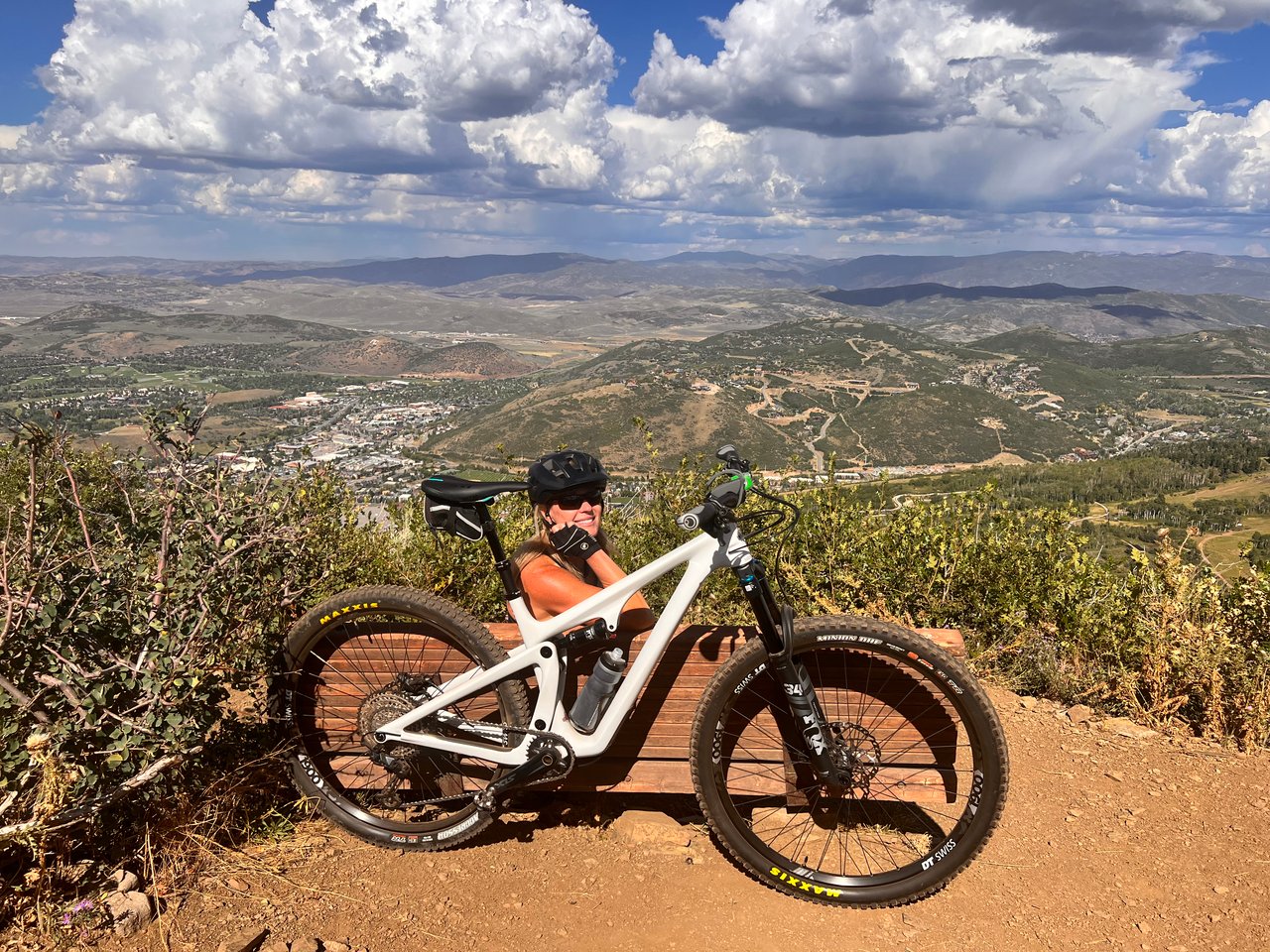
From higher elevations, the landscape can open dramatically toward the Snyderville Basin, Swaner Preserve, Old Ranch Road, distant mountain ranges and the broader Park City valley.
From more sheltered properties, the experience is different: mature trees, canyon walls and natural open space create an intimate mountain setting.
This variation is precisely why two Sun Peak properties only a short distance apart can feel completely different.
One may be about the view.
Another may be about the trees.
Another may be about trail access.
Another may be about architectural scale.
Another may sit beside open space.
In Sun Peak, the lot and its orientation are every bit as important as the house itself.
One of Sun Peak's most consequential assets is not something that was built.
It is what was deliberately preserved.
The Sun Peak Master Association currently owns approximately 312 acres of open space, an unusually substantial amount of undeveloped land woven through and around an established Park City residential community. The HOA explains that the original development concept dating to the early 1990s intentionally clustered residential parcels nearer the developed core while preserving significant portions of the surrounding natural landscape.
That early planning decision now has enormous value.
Instead of maximizing every hillside for development, Sun Peak retained native mountain terrain.
The result is visible throughout the community.
Homes may back to undeveloped land rather than another residential street.
Trail corridors move through natural terrain.
Aspen and evergreen stands continue beyond private property lines.
Wildlife habitat remains connected across parts of the hillside.
And the visual density of the neighborhood is softened dramatically by the amount of land that remains open.
For luxury buyers, this is a critical distinction.
A spectacular residence can be remodeled.
A dated kitchen can be replaced.
A new home can be built.
But once a mountain hillside has been subdivided and developed, open space of this scale is almost impossible to recreate.
Sun Peak already has it.
Sun Peak is an established master-planned community rather than one uniform subdivision.
Current association materials identify the Sun Peak Master Association as comprising 374 owners of lots or condominium units, with a variety of residential neighborhoods contained beneath the master structure. The governing documents expressly describe Sun Peak as a diverse community intended to offer different housing options while maintaining consistency in design quality and general appearance.
The official Sun Peak subdivision map identifies residential areas including Cedar Draw, Cedar Draw Estates, Cedar Draw Estates II, Mahogany Hills, Mahogany Hills II, Willow Draw, and The Cove at Sun Peak, among other neighborhood parcels. Some individual developments carry supplemental covenants or their own sub-associations in addition to the master association.
That means “Sun Peak real estate” does not refer to one architectural product.
It encompasses a broad spectrum of property types, settings and ownership structures.
That diversity is one of the community's strengths.
Sun Peak developed across several decades, and its architecture reflects Park City's evolution from a regional ski town into an internationally recognized luxury mountain market.
The community contains established single-family residences, larger custom mountain homes, attached residences and luxury properties positioned to take advantage of elevated views, wooded settings or adjoining open space.
Earlier homes often reflect the traditional mountain architecture prevalent throughout Park City during the 1990s and early 2000s: stone, timber, steep roof forms, masonry fireplaces, vaulted interiors and decks projecting toward surrounding scenery.
Many have subsequently been renovated.
More contemporary residences increasingly emphasize expansive glazing, cleaner rooflines, steel, refined stonework, lighter interiors and stronger connections between indoor and outdoor living.
Unlike a new development where every residence emerged from the same design period, Sun Peak possesses architectural layers.
The neighborhood has had time to evolve.
And that gives buyers significantly more choice.
Sun Peak's terrain plays a major role in its architecture.
Homes frequently step with the hillside rather than spread horizontally across flat land. Walkout lower levels, elevated terraces, multi-story window walls and multiple outdoor living areas can make excellent use of the natural grade.
A well-designed Sun Peak residence may reveal a different landscape from each floor.
The primary living level might look east across the Snyderville Basin.
A guest level may open directly onto a wooded slope.
A private terrace may be tucked beneath mature aspens.
Another deck may face an enormous panorama.
That relationship between structure and terrain creates architectural possibilities that simply do not exist on a flat subdivision lot.
Sun Peak's best residences are not merely on the mountain.
They feel integrated into it.
Any sophisticated description of the broader Sun Peak area should include Enclave at Sun Canyon.
Located along the Sun Peak/Bear Hollow mountain corridor, Enclave is a boutique luxury development of attached and custom residences designed to integrate aggressively with the surrounding mountain environment rather than dominate it.
Its architecture is particularly distinctive.
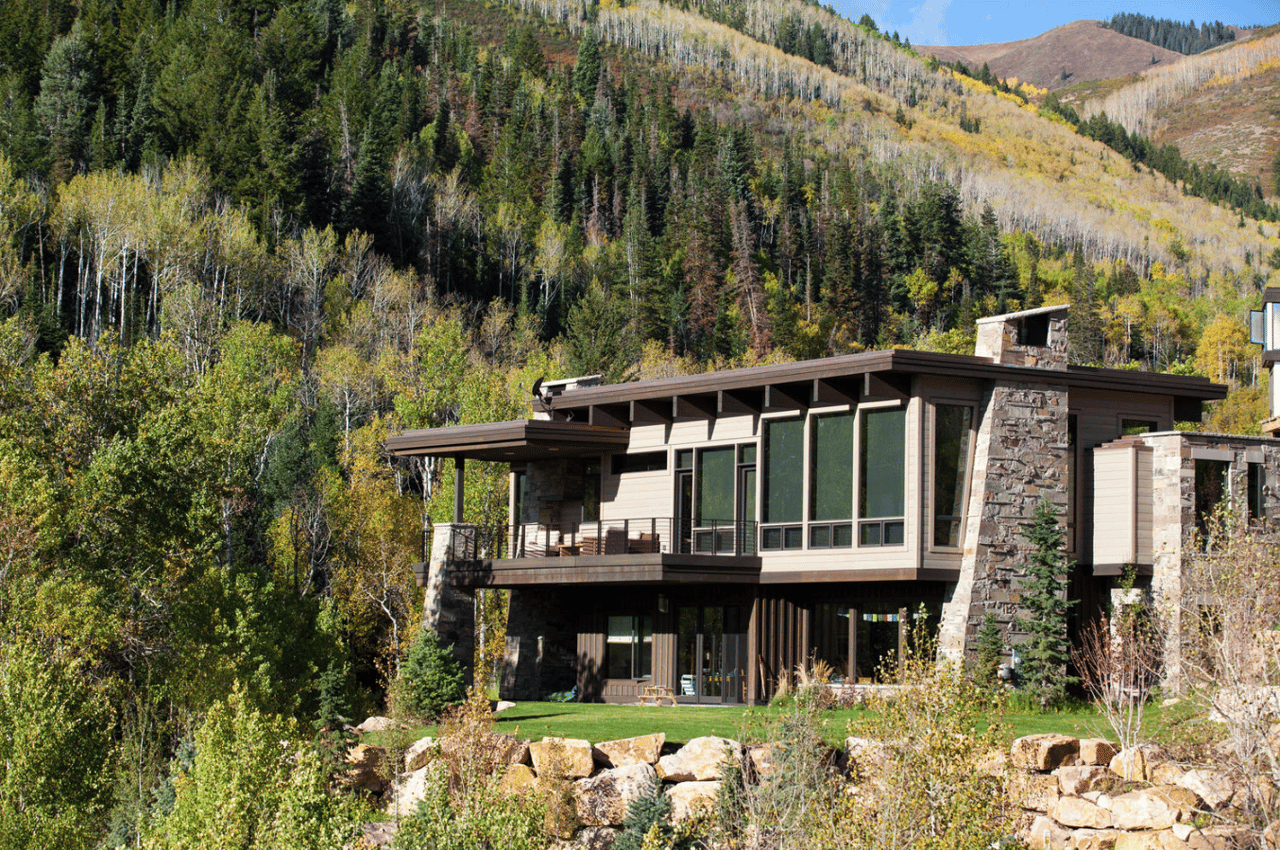
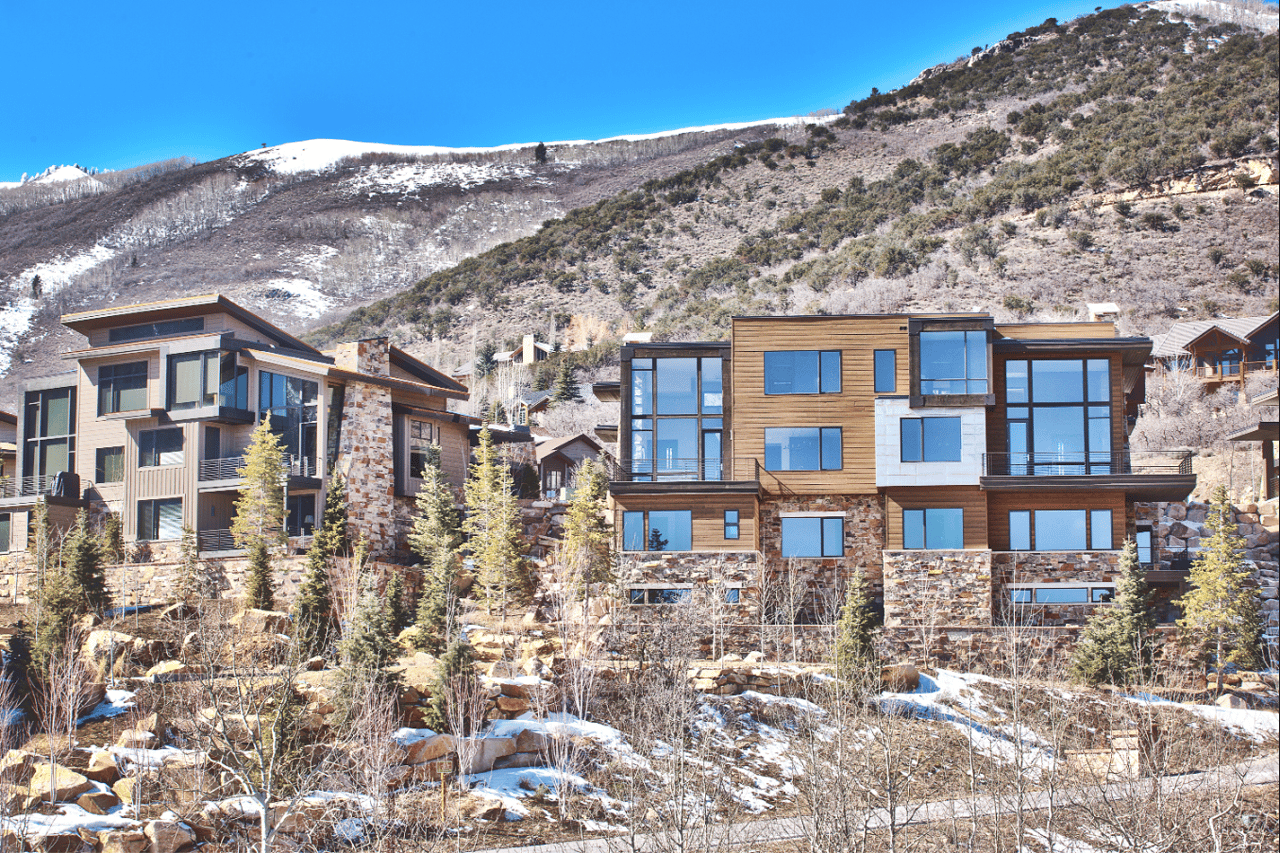
Residences incorporate stacked stone, expansive floor-to-ceiling glass, metal roofing and living or grass-roof elements, creating a mountain-contemporary aesthetic that feels dramatically different from much of Park City's earlier resort architecture.
The development is surrounded by roughly 60 acres of open space and private trails, reinforcing the sense that buildings have been inserted into the canyon landscape rather than arranged around a conventional subdivision street. Sun Peak's wildfire-management documentation identifies Enclave directly south of Bear Hollow Drive and treats it as an important neighboring mountain community in coordinated fire and fuels-management planning.
This governance distinction matters.
For real-estate purposes, Enclave should be understood as part of the broader Sun Peak area geographically, but buyers should not assume its HOA, covenants, maintenance responsibilities or rental rules are identical to the Sun Peak Master HOA. Those must be verified for the individual property.
Architecturally, however, Enclave belongs squarely in the Sun Peak story.
It represents the area's most overtly design-forward interpretation of luxury mountain living.
Enclave's design language deserves attention because it illustrates how sophisticated mountain architecture can behave when the landscape is treated as the primary design element.
The buildings use heavy natural stone to visually anchor themselves to the ground, while extensive glazing opens the interiors toward canyon and mountain views. Metal roofs contrast with sections of living roof, allowing portions of the architecture to merge visually with the terrain.
Rather than recreating a stylized Western lodge, Enclave takes a more contemporary approach.
The result is architecture that feels distinctly Park City but not nostalgic.
It is modern without becoming urban.
Luxury without excessive ornament.
And substantial without overwhelming the hillside.
For buyers drawn to contemporary design, Enclave gives the Sun Peak area another layer of appeal beyond its traditional single-family inventory.
This is one of the elements that needs to be emphasized much more strongly on a Sun Peak neighborhood page.
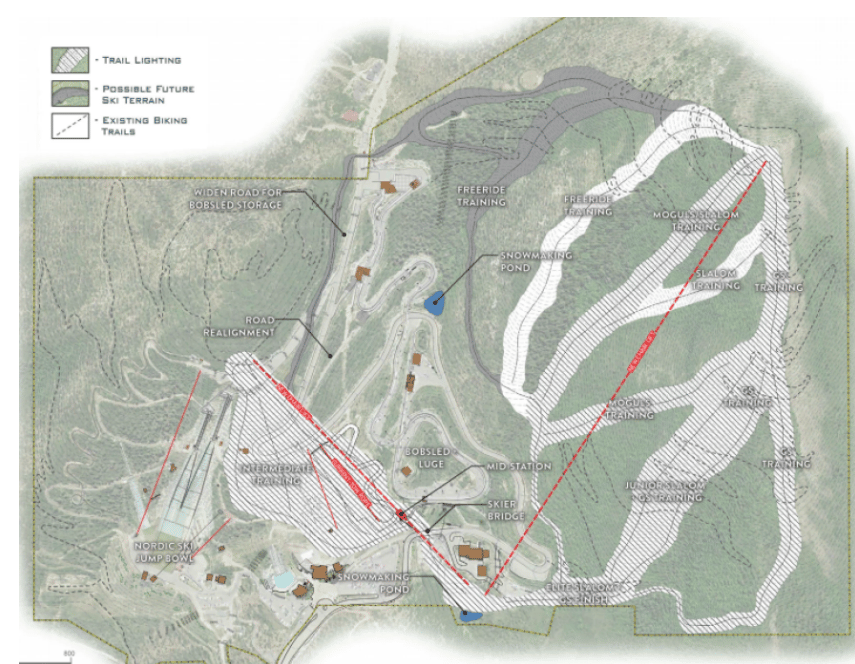
Utah Olympic Park directly borders Sun Peak to the north.
The nearly 400-acre venue was constructed for the Salt Lake 2002 Olympic Winter Games and contains one of North America's few sliding tracks, six Nordic ski jumps, Olympic museums, athletic training facilities and extensive recreational terrain. It remains an official U.S. Olympic and Paralympic training site and a major component of Park City's year-round outdoor culture.
From Sun Peak, residents experience the back side and mountain terrain of the Olympic Park, not merely the visitor-facing facilities along Olympic Parkway.
This distinction gives the neighborhood a particularly unusual setting.
Instead of regarding Utah Olympic Park as an attraction across town, Sun Peak occupies the mountain system immediately adjoining it.
The Olympic landscape is literally part of the neighborhood's northern edge.
Utah Olympic Park maintains an extensive hiking and biking network that connects into the larger Park City trail system. Its official trail information describes mountain-bike and hiking connections extending from within the Olympic venue toward Park City's broader ridge and trail network.
That matters enormously for Sun Peak.
The neighborhood sits within a much larger recreational ecosystem rather than containing only a few isolated internal trails.
Sun Peak's own official map identifies community trails including Rob's Trail, Collin's Trail and HOA trail connections, with routes continuing toward Mid Mountain and Ambush. It also identifies a Utah Olympic Park trail connection on the northern side of the neighborhood.
This makes Sun Peak one of Park City's particularly strong trail-oriented residential communities.
A trail can begin close to home and eventually become part of a much larger day in the mountains.
Rob's Trail is among the best-known recreational connections associated with Sun Peak.
The route climbs from the Sun Peak area through wooded mountainside terrain and links into Park City's larger trail system. Basin Recreation's Olympic Loop description specifically directs riders from the Rob's Trailhead, continuing through forested terrain and connecting with surrounding routes.
For mountain bikers, hikers and trail runners, this is an extraordinary residential advantage.
Trail access is not abstract.
It is immediate.
A ride does not necessarily begin by putting bicycles on a rack and driving across town.
A hike does not require an elaborate morning plan.
The mountain is already outside.
That changes how frequently recreation becomes part of everyday life.
Sun Peak's official community map also identifies Collin's Trail and connections toward Mid Mountain Trail and Ambush.
This matters because Mid Mountain is one of Park City's signature trail corridors, linking large portions of the resort-side mountain landscape.
Rather than existing as a closed neighborhood trail system, Sun Peak functions as an entry point into something much larger.
That is one of Park City's defining characteristics.
Trails are not merely recreational amenities.
They operate almost like mountain infrastructure, connecting neighborhoods, ridges, ski areas and open space.
Sun Peak sits directly within that system.
On the opposite side of Sun Peak's recreational identity is Canyons Village at Park City Mountain.
Canyons Village serves as one of Park City Mountain's principal base areas and provides lift access, dining, lodging, retail and year-round resort activity. Park City Mountain currently identifies approximately 7,300 acres of skiable terrain across the resort.
Sun Peak is generally not a ski-in/ski-out neighborhood.
That should be stated clearly.
Its advantage is something different.
Residents can live extremely close to one of the country's largest ski-resort systems while retaining the privacy, garages, open space, neighborhood streets and residential atmosphere of a true mountain community.
For many primary and second-home buyers, this is a better balance than living directly at the base.
Skiing is close enough to become routine without turning home into a resort.
Sun Peak's geography can ultimately be distilled into a remarkably simple idea.
On one side:
Park City Mountain and Canyons Village.
On the other:
Utah Olympic Park and its Olympic mountain terrain.
Sun Peak rises between them.
That gives the community an identity no golf-course neighborhood, valley-floor subdivision or Main Street property can duplicate.
This is not Park City viewed from the outside.
It is a neighborhood inserted directly into the recreational geography of Park City itself.
Sun Peak's natural amenities are complemented by a private neighborhood recreation complex centered at the Sun Peak Clubhouse at 1950 Bear Hollow Drive.
Current HOA materials identify community amenities including the clubhouse and recreation center, exercise room, seasonal outdoor swimming pool, tennis courts, pickleball courts and playground. Annual assessments also support community open space, trails, entry features and association governance.
The recreation center is important because it gives Sun Peak another identity beyond skiing and trails.
Residents do not need to leave the community for every recreational activity.
Summer has its own neighborhood rhythm.
Children can swim.
Residents can use the fitness facility.
Tennis and pickleball provide alternatives to mountain recreation.
Community life can happen around shared amenities rather than solely at the ski resort.
The seasonal outdoor swimming pool is one of Sun Peak's signature warm-weather amenities.
Current association materials note that the pool area underwent a significant remodel in 2022, while the HOA continues to maintain resident access and operations during the summer season.
That amenity fundamentally changes the character of summer.
A morning might begin on a mountain-bike trail.
The afternoon might be spent at the pool.
Dinner might happen at Canyons Village or in Kimball Junction.
And all of it can occur without sacrificing the feeling of living in a mountain neighborhood.
The Sun Peak recreation complex also includes tennis and pickleball courts maintained for residents.
This broadens the neighborhood's appeal considerably.
Sun Peak is not dependent upon one recreational identity.
It is not only for skiers.
Not only for mountain bikers.
Not only for people seeking a mountain view.
Its private facilities support a more comprehensive year-round lifestyle.
Only a short distance below Sun Peak lies Kimball Junction, the principal commercial hub at Park City's northern entrance.
That proximity is one of Sun Peak's practical strengths.
Living on a mountainside can suggest remoteness.
Sun Peak is anything but remote.
Groceries, restaurants, shops, professional services, recreation facilities and access toward Interstate 80 are close at hand, while Highway 224 provides the direct route toward Canyons Village and central Park City.
This may not sound as glamorous as powder skiing.
It becomes tremendously important when a home is used every day.
A successful primary-residence neighborhood must function on Tuesday morning as beautifully as it does on Christmas week.
Sun Peak does.
Sun Peak is also only minutes from the historic center of Park City, according to the HOA's own neighborhood description.
Historic Main Street offers the dining, galleries, boutiques, cultural events and nightlife that give Park City its urban mountain character.
The benefit of Sun Peak is that owners can participate in that energy without living directly inside it.
Dinner can happen on Main Street.
Home can still be a wooded mountainside residence.
That separation is meaningful.
The town is close. The mountain remains home.
Sun Peak's elevation produces an entirely different relationship with the Snyderville Basin than neighborhoods located on the valley floor.
From selected properties, the eye can travel across the open spaces and residential landscapes below toward distant mountain ridges.
The Swaner Preserve and Old Ranch Road corridor add important visual depth to easterly perspectives.
Rather than staring directly into the next hillside, many elevated homes can experience the landscape in layers:
natural foreground,
valley floor,
preserved open space,
distant development,
mountain range,
sky.
This depth is what gives elevated mountain real estate much of its drama.
And Sun Peak has it in abundance.
Because Sun Peak wraps around changing slopes and elevations, orientation matters enormously.
An east-facing residence may capture extraordinary morning light over the Snyderville Basin.
A more sheltered canyon property may receive less panoramic exposure but gain forested privacy.
Another site may orient toward the Uinta Mountains.
Another may face natural Sun Peak open space.
Another may be positioned primarily around southern exposure.
These differences affect far more than the view.
They influence winter sunlight, snow retention, driveway conditions, landscape performance and outdoor living.
For buyers, this means the neighborhood should never be evaluated solely by asking, “Which street is best?”
The more useful question is:
How does this particular lot sit on the mountain?
Sun Peak does not rely exclusively on large acreage to create privacy.
Topography does much of the work.
Homes positioned at different elevations may have surprisingly little direct visual relationship with one another.
Natural vegetation can screen neighboring properties.
Open-space parcels interrupt continuous development.
Road curvature changes sightlines.
A slope itself can become a privacy wall.
This is mountain planning at its most useful.
A parcel does not always need to be enormous if the land around it is configured intelligently.
Summer is perhaps the season when Sun Peak's full identity becomes clearest.
The snow disappears from residential streets.
Aspens leaf out.
Native vegetation turns green.
Mountain-bike and hiking trails become immediately accessible.
The community pool opens.
Tennis and pickleball return outdoors.
Canyons Village shifts from skiing toward warm-weather recreation and events.
And terraces become genuine living rooms.
A Sun Peak resident can begin the morning on Rob's Trail, work from home overlooking the valley, spend an afternoon at the pool and have dinner in Canyons Village or Park City.
That is not simply access to recreation.
It is integration of recreation into ordinary life.
Autumn transforms the mountain.
Aspens shift to luminous yellow.
Scrub oak deepens toward copper and rust.
Evergreens become more dramatic by contrast.
Morning temperatures sharpen.
Long views across the valley become increasingly crisp.
Because Sun Peak contains extensive natural terrain rather than only residential landscaping, the seasonal change occurs at a landscape scale.
Entire hillsides change color.
For homeowners with broad glazing or outdoor terraces, autumn becomes part of the architecture.
The house does not merely look at the season.
It frames it.
Winter restores Sun Peak to its most recognizable Park City identity.
Snow settles into the open-space parcels and trees.
Canyons Village comes fully alive.
Utah Olympic Park returns to winter-sports training and recreation.
The same mountainside trails that define summer take on an entirely different character.
And homes become quiet refuges between two major winter-sports landscapes.
This is where Sun Peak's location becomes especially compelling.
A resident can be close to skiing without living over a resort plaza.
Close to Olympic activity without living inside a visitor attraction.
Close to Park City without living amid Main Street congestion.
Winter surrounds Sun Peak without overwhelming it.
Utah Olympic Park remains an active winter-sports facility rather than a preserved museum of the 2002 Games.
The venue continues to support athletic development and public recreation, with its historic sliding track, Nordic jumps and mountain facilities forming one of Park City's most recognizable sporting landscapes.
For Sun Peak homeowners, that Olympic heritage is geographically immediate.
The mountain immediately beyond the neighborhood is not simply another undeveloped ridge.
It is part of the landscape that helped define Utah's Olympic identity.
That is a genuine place-specific distinction.
Spring is less polished—and arguably more revealing.
Snow recedes unevenly across different exposures.
Trails emerge slowly.
Aspens begin to leaf.
Open-space vegetation changes from winter brown toward green.
Wildlife activity increases.
And the realities of living at the edge of mountain vegetation become more visible.
This season is also when responsible wildfire preparation becomes especially relevant.
Sun Peak's beauty and its stewardship obligations are inseparable.
Because Sun Peak sits within the wildland-urban interface, wildfire planning is an important part of responsible ownership.
The HOA maintains an active fire-safety program, publishes wildfire assessments and defensible-space information, and identifies Sun Peak as a Firewise community in current association materials.
Its planning is unusually instructive because the HOA coordinates with surrounding mountain landowners and communities, including Utah Olympic Park and Enclave at Sun Canyon.
That collaborative approach reflects the reality of wildfire management.
Fire does not recognize HOA boundaries.
Neither does forest health.
For buyers considering property adjacent to natural open space, due diligence should include defensible space, vegetation management, insurance considerations, access, slope and property-specific wildfire exposure.
This does not diminish the value of the landscape.
It is part of what responsible mountain ownership requires.
Sun Peak is fundamentally a residential community, not a transient resort district.
The Sun Peak Master HOA currently states explicitly that it does not permit nightly rentals.
That distinction materially shapes the neighborhood.
Homes are not constantly turning over between weekend guests.
Residential streets do not function primarily as hotel corridors.
The community's amenities are designed around owners and residents.
For buyers seeking short-term rental income, this restriction is consequential and property-specific governing documents should always be verified.
For buyers seeking a primary residence or second home in a quieter environment, the restriction may be a significant advantage.
Because Sun Peak contains multiple subdivisions and property types, buyers should not assume that every residence carries identical fees, restrictions or maintenance obligations.
The Sun Peak Master Association provides the overarching structure, but certain neighborhoods have supplemental declarations and at least some have separate sub-associations. Current HOA materials specifically note that The Cove at Sun Peak carries a sub-association in addition to the master association.
Accordingly, every purchase should include review of the applicable master documents, supplemental CC&Rs, architectural standards, sub-association documents where relevant, current assessments and property-specific restrictions.
That level of diligence is particularly important when comparing single-family homes with condominium or townhome properties.
Sun Peak lies within the Park City School District.
The district's current boundary information specifically identifies Sun Peak within the Parley's Park Elementary School neighborhood boundary. The district also cautions that its published boundary information should not substitute for address-specific verification, so buyers should confirm school assignment directly for the individual property.
Parley's Park Elementary is located in the nearby Silver Springs area, reinforcing Sun Peak's practicality for primary-residence ownership.
Sun Peak and Willow Creek are geographically close, yet almost opposite in physical experience.
Willow Creek is flatter, greener and closely associated with usable yards, Willow Creek Park and the meadow landscape surrounding Old Ranch Road.
Sun Peak climbs into the mountain.
Its defining characteristics are elevation, open-space hillside, trees, trail access, private HOA recreation facilities and views over the basin.
Willow Creek's luxury is largely usable land.
Sun Peak's luxury is largely mountain terrain and perspective.
For buyers deciding between the two, the decision often begins with the landscape rather than the house.
Ranch Place sits across the broader valley landscape and benefits enormously from its adjacency to Swaner Preserve and relatively flat trail-oriented streets.
Sun Peak looks outward and downward toward that open terrain.
Ranch Place is inside the meadow landscape.
Sun Peak is above it.
Ranch Place feels pastoral.
Sun Peak feels alpine.
Both function beautifully for year-round living, but the emotional experience is dramatically different.
Silver Springs is one of the Snyderville Basin's classic established residential areas.
It tends to emphasize flatter streets, mature landscaping, lakes and conventional residential lots.
Sun Peak provides greater elevation, stronger hillside character, larger stretches of master-association open space and private recreational amenities.
Silver Springs is relaxed valley-floor living.
Sun Peak is residential mountain living.
Sun Peak and Bear Hollow are often grouped together in MLS and consumer real-estate searches, but they should not be conflated.
Bear Hollow contains a greater concentration of attached housing and has its own development structures and amenities.
Sun Peak refers specifically to the master community with its 312 acres of open space, clubhouse, recreation center, trails and multiple neighborhood parcels.
Because the areas physically interlock and share Bear Hollow Drive, casual descriptions frequently blend them together.
A high-quality real-estate page should not.
The geography overlaps.
The ownership structures do not necessarily.
The difference here is even clearer.
Canyons Village is a resort.
Sun Peak is a neighborhood.
Canyons Village emphasizes immediate lift access, hospitality, resort residences, restaurants and visitor activity.
Sun Peak emphasizes homes, garages, trails, open space, private community recreation and a quieter residential environment.
The two are close enough to complement one another beautifully.
A Sun Peak resident can use Canyons Village almost as a neighborhood ski base while still returning home to a residential mountainside.
That may be one of Sun Peak's most compelling propositions.
The resort is nearby. It does not have to be home.
Park Meadows offers one of Park City's great in-town residential lifestyles: broad streets, private golf, recreation and immediate proximity to central Park City.
Sun Peak offers something fundamentally different.
Its orientation is toward Canyons Village, Utah Olympic Park, trails and the Snyderville Basin rather than Historic Main Street and the Park Meadows golf course.
Park Meadows is in-town residential luxury.
Sun Peak is elevated mountain residential luxury.
Both are established.
Both work well for primary ownership.
The choice largely depends on which version of Park City a buyer wants outside the window.
Promontory is a major gated private-club community with enormous amenity infrastructure, multiple golf experiences and a highly curated lifestyle.
Sun Peak is considerably more organic.
Its defining amenities are the land itself, the trail network, neighborhood recreation center, proximity to skiing and direct relationship with Utah Olympic Park.
There is no need to drive miles through a private development before reaching the outside world.
Sun Peak trades resort-scale club programming for mountain immediacy.
For certain buyers, that is the more compelling form of luxury.
Old Town represents Park City's historic urban mountain experience.
Main Street.
Mining-era architecture.
Walkability.
Restaurants.
Town Lift.
Compact lots.
Resort activity.
Sun Peak offers the opposite spatial experience.
Larger homes.
Mountain terrain.
Open space.
Garages.
Views.
Private recreational facilities.
Trails.
A quieter nighttime environment.
A Sun Peak owner can still have dinner on Main Street.
But when dinner is over, home is back in the mountains.
Enclave at Sun Canyon gives the broader Sun Peak area something particularly valuable from a marketing perspective:
architectural credibility.
Sun Peak should not be presented solely as a collection of 1990s mountain homes with a community pool.
That would miss how varied and sophisticated the area has become.
Enclave demonstrates the opposite end of the spectrum: contemporary mountain architecture, significant glazing, green roofs, natural stone, open space and direct integration with the canyon terrain.
Placed alongside Sun Peak's more traditional custom homes and mature subdivisions, it illustrates the breadth of real estate available within this part of Park City.
The neighborhood is established.
It is not static.
The same is true of Utah Olympic Park.
It should not be relegated to one sentence under “nearby attractions.”
It is a physical boundary of Sun Peak.
That changes the story entirely.
Sun Peak residents do not merely drive past Olympic Park on their way home.
The neighborhood rises directly into the mountain landscape beside it.
Trails connect through the broader system.
The Olympic terrain forms part of the surrounding ridgeline.
And the history of the Salt Lake 2002 Games remains embedded in the land immediately adjacent to the community.
Few neighborhoods anywhere can make that claim.
Sun Peak is particularly compelling for buyers whose idea of Park City extends beyond owning a beautiful house.
It suits people who ski.
Ride.
Hike.
Run trails.
Snowshoe.
Use the pool.
Play tennis or pickleball.
Spend summer evenings outdoors.
Want a real garage.
Need room for bikes and skis.
Prefer a quiet home to a hotel corridor.
Want grocery stores close enough to be practical.
And still want to look outside and know immediately why they chose Park City.
Sun Peak's success lies in the way those elements coexist.
Sun Peak works exceptionally well as a primary-residence neighborhood because it does not require residents to sacrifice practicality for scenery.
Kimball Junction is close.
Schools are accessible.
Highway 224 is immediately below.
I-80 is readily reached to the north.
Canyons Village is nearby.
Park City is nearby.
Trails begin around the neighborhood.
Private amenities remain within the community.
This is a place where a spectacular Saturday and an entirely ordinary Wednesday can both work.
And for full-time mountain living, that may matter more than almost anything else.
For second-home owners, Sun Peak offers a different advantage.
Arriving in Park City does not mean managing a remote mountain estate or living amid constant resort turnover.
A home can be substantial and private while remaining convenient.
Skiing is nearby.
Dining is nearby.
Groceries are nearby.
Recreation begins immediately.
And the HOA's restriction on nightly rentals helps preserve a more residential atmosphere.
It can therefore provide the privacy of a mountain retreat without creating the logistical burden sometimes associated with more isolated second homes.
Park City offers many interpretations of luxury.
Ski access.
Golf.
Acreage.
Historic architecture.
Five-star resort services.
Private clubs.
Sun Peak offers something more elemental.
Open land.
Three hundred twelve acres within the master community alone.
Land where homes were not built.
Land that carries trails.
Land covered in aspens and native vegetation.
Land separating one residential pocket from another.
Land creating wildlife habitat.
Land making the mountain still feel like a mountain.
This may ultimately prove more important than any single amenity.
Architecture ages.
Amenities are renovated.
Interior design changes.
The land remains.
Sun Peak's second great advantage is position.
Not merely location on a map.
Position within Park City's recreational geography.
Utah Olympic Park directly to the north.
Canyons Village and Park City Mountain immediately nearby.
Kimball Junction below.
Swaner and the Snyderville Basin spreading east.
Historic Park City farther south.
Trails passing through the hills.
The neighborhood sits at the intersection of nearly every major component of the western Park City lifestyle.
Yet from inside the community, it can still feel like a mountain retreat.
That is difficult to achieve.
The Sun Peak buyer is often not looking for one singular amenity.
They are looking for balance.
They want a substantial residence, but not necessarily a remote estate.
They want skiing nearby, but not necessarily a gondola outside the bedroom.
They want amenities, but may not need a private golf club.
They value trail access, trees, views and open space.
They may be drawn to the architectural sophistication of Enclave or the established character of Sun Peak's custom-home neighborhoods.
They want to participate fully in Park City while retaining a home that feels genuinely separate from its resort activity.
For that buyer, Sun Peak is remarkably difficult to replicate.
A winter morning can begin at Canyons Village.
A summer morning can begin on Rob's Trail.
An afternoon can end at the Sun Peak pool.
An autumn evening can unfold beneath golden aspens.
A family can visit Utah Olympic Park.
A cyclist can disappear into the trail system.
Dinner can happen in Park City.
Groceries can happen in Kimball Junction.
And at the end of all of it, home remains a wooded mountain neighborhood surrounded by open land.
That is Sun Peak.
Not simply a ski neighborhood.
Not simply a suburb.
Not simply an HOA.
It is a four-season residential community positioned inside the recreational landscape that defines Park City itself.
For buyers searching for Sun Peak homes for sale, Enclave at Sun Canyon real estate, Park City luxury homes near Canyons Village, residences adjoining Utah Olympic Park, mountain-view properties, trail-access homes or established primary residences in the Snyderville Basin, Sun Peak deserves serious consideration.
The master community combines approximately 312 acres of HOA-owned open space with a private clubhouse, fitness facilities, seasonal pool, tennis and pickleball courts, playground and extensive trail access.
Its northern edge directly meets Utah Olympic Park land.
Its trail network connects toward Park City's larger mountain system.
Canyons Village and more than 7,300 acres of Park City Mountain terrain lie nearby.
And within the broader Sun Peak area, Enclave at Sun Canyon adds one of this side of Park City's most architecturally distinctive expressions of contemporary mountain luxury.
Few Park City neighborhoods combine all of those elements within one setting.
Sun Peak is where Park City Mountain meets Park City's Olympic legacy—and where the space between them has become an extraordinary place to live.
If you are interested in real Estate in the Sun Peak Area or Enclave at Sun Canyon call me today.
20,311 people live in SUN PEAK in Park City, Utah, where the median age is 41.9 and the average individual income is $85,653. Data provided by the U.S. Census Bureau.
Total Population
Median Age
Population Density Population Density This is the number of people per square mile in a neighborhood.
Average individual Income
There's plenty to do around SUN PEAK in Park City, Utah, including shopping, dining, nightlife, parks, and more. Data provided by Walk Score and Yelp.
Explore popular things to do in the area, including Park City Cakery, Ramblin' Rose Cafe, and Lady Sugar Sparkles.
| Name | Category | Distance | Reviews |
Ratings by
Yelp
|
|---|---|---|---|---|
| Dining | 0.36 miles | 4 reviews | 3/5 stars | |
| Dining | 0.67 miles | 6 reviews | 5/5 stars | |
| Dining | 0.67 miles | 0 reviews | 0/5 stars | |
| Dining | 0.67 miles | 0 reviews | 0/5 stars | |
| Dining | 0.67 miles | 1 review | 5/5 stars | |
| Dining | 0.67 miles | 5 reviews | 5/5 stars | |
| Active | 0.4 miles | 4 reviews | 5/5 stars | |
| Active | 0.67 miles | 0 reviews | 0/5 stars | |
| Active | 0.67 miles | 0 reviews | 0/5 stars | |
| Active | 0.67 miles | 6 reviews | 5/5 stars | |
| Active | 0.67 miles | 3 reviews | 5/5 stars | |
| Active | 0.67 miles | 1 review | 5/5 stars | |
| Active | 0.67 miles | 0 reviews | 0/5 stars | |
| Active | 0.67 miles | 2 reviews | 5/5 stars | |
| Active | 0.67 miles | 1 review | 5/5 stars | |
| Active | 0.67 miles | 1 review | 5/5 stars | |
| Beauty | 0.67 miles | 0 reviews | 0/5 stars | |
| Beauty | 0.67 miles | 0 reviews | 0/5 stars | |
| Beauty | 0.67 miles | 0 reviews | 0/5 stars | |
| Beauty | 0.67 miles | 0 reviews | 0/5 stars | |
| Beauty | 0.67 miles | 0 reviews | 0/5 stars | |
| Beauty | 0.67 miles | 0 reviews | 0/5 stars | |
| Beauty | 0.67 miles | 28 reviews | 4.9/5 stars | |
|
|
||||
|
|
||||
|
|
||||
|
|
||||
|
|
||||
|
|
SUN PEAK in Park City, Utah has 6,926 households, with an average household size of 2.92. Data provided by the U.S. Census Bureau. Here’s what the people living in SUN PEAK in Park City, Utah do for work — and how long it takes them to get there. Data provided by the U.S. Census Bureau. 20,311 people call SUN PEAK in Park City, Utah home. The population density is 283 and the largest age group is Data provided by the U.S. Census Bureau.
Total Population
Population Density Population Density This is the number of people per square mile in a neighborhood.
Median Age
Men vs Women
Population by Age Group
0-9 Years
10-17 Years
18-24 Years
25-64 Years
65-74 Years
75+ Years
Education Level
Total Households
Average Household Size
Average individual Income
Households with Children
With Children:
Without Children:
Marital Status
Blue vs White Collar Workers
Blue Collar:
White Collar: